


 Australia
 Canada
 France
 Germany
 Indonesia
 Japan
 United Kingdom
 Italy
 Spain

4 Sleep Positions to Try With an Adjustable Bed for Better Health and Relaxation

If you’ve been considering an adjustable bed, you’re probably looking for one of two things: better sleep or added convenience (or both!). And for many people, the right positioning and features can make a world of difference.
What are the benefits of an adjustable bed?
In a nutshell, an adjustable bed base can help you achieve positioning that a standard, flat frame can’t. When you elevate your head, feet, or both, it results in many benefits, including:
- Reduced joint and back pain
- Improved digestion
- Reduced snoring and improved breathing
- Reduced swelling
- Ease of getting in and out of bed
- Easy positioning for watching TV, reading, using the computer, or enjoying a bedtime snack
And you can position your adjustable bed according to your specific needs.
Positions to try with an adjustable bed
1. Zero gravity
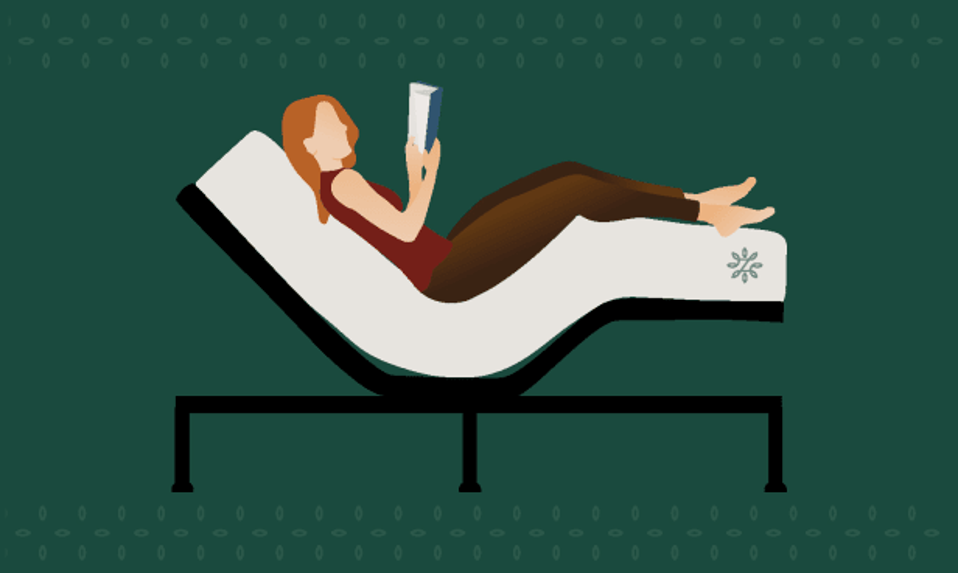
This neutral position puts your entire body in the “no stress zone” by lifting the head and legs to create a 120 degree angle bend at the hips. It evenly distributes your weight, meaning that pressure is taken off of areas (often the hips, shoulders, and spine) that are normally put under strain on a flat surface. For this reason, zero gravity position is especially good for joint or back pain sufferers. And some adjustable beds even have a preset zero gravity button that takes all the guesswork out of getting it right.
2. Legs elevated

It’s a common practice to sleep or rest with elevated legs to help reduce leg swelling. But also, elevating the legs can create the best sleeping position for lower back pain and sciatica, a condition that can cause back pain and leg pain or numbness. Additionally, when your legs are raised, it encourages blood to flow toward your heart, improving overall circulation.
3. Contour
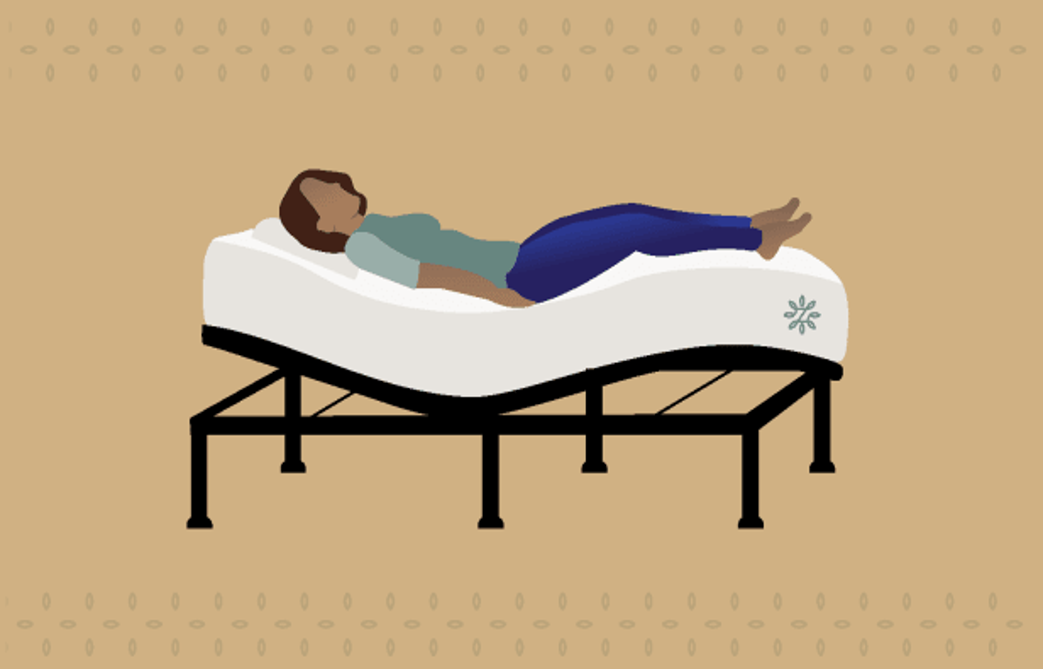
A contoured position, where both the head and legs are slightly elevated, supports the natural curvature of your spine. It’s especially fitting for both back and side sleepers, since the curve created in the middle can support the hips and bottom. If you have back pain caused by poor posture or overuse, this sleeping position should provide some much needed relief.
4. Head elevated

Sleeping or relaxing with your head elevated improves both breathing and digestion. It opens airways and nasal passages to reduce the symptoms of conditions like snoring, congestion, COPD, and sleep apnea. The incline also helps alleviate heartburn and acid reflux by keeping stomach acids from travelling up the esophagus.
And then there’s the much more obvious benefit of being able to lounge comfortably in bed without stuffing a bunch of pillows underneath you. If you find yourself reading, online shopping, or eating the occasional breakfast in bed, many adjustable beds make it easy to get comfortable with the press of a button.
What kind of mattress is right for my adjustable bed?
Of course, your comfort on an adjustable base won’t be quite right without the right mattress. A good adjustable bed mattress should be flexible and not too thick. A 25cm memory foam mattress, for example, checks both of these boxes. Memory foam is more soft and bendable than a spring or hybrid mattress, and a lower profile (generally 30 cms or less for a foam mattress) is also better suited to bend without bulging. And if you prefer the firmer feel of a spring mattress, opt for one that’s no more than 20cm thick, like our Green Chiro 5 Zone Pocket Spring Mattress.

6 comments
-
Oxy Relief Canada on
This is such an important conversation. One thing I’ve found helpful in managing widespread pain is understanding the difference between acute and centralized pain — they respond to very different approaches. For anyone exploring non-pharmacological options, this resource has some useful background: https://oxyreliefcanada.com/ Thanks for opening up this discussion — it helps so many people feel less alone.
-
PainRx Canada on
Thank you for sharing this informative article about sciatica. Sciatic nerve pain can significantly affect a person’s quality of life, causing discomfort that travels from the lower back through the buttocks and down the leg. Symptoms such as tingling, numbness, and weakness can also make everyday activities challenging. Understanding the underlying cause, staying appropriately active, and seeking professional medical guidance are important steps toward effective symptom management. Raising awareness about sciatica helps people better understand their condition and explore suitable treatment options.
For readers looking for additional information about chronic pain, nerve pain, and pain management, https://painrxcanada.com/ may also be a helpful resource.
Thanks again for sharing valuable information and helping people living with sciatica feel more informed and supported.
-
PainRx Canada on
Thanks for sharing this helpful information about sciatica. Sciatic pain can affect people differently, and symptoms may involve the lower back, buttock, and leg, sometimes with numbness or tingling. It’s also important to consider the underlying cause rather than treating the pain alone. Staying appropriately active and getting professional guidance can be helpful, particularly when symptoms persist or interfere with daily activities.
For anyone looking for additional information about back pain and pain management, this resource may also be useful: https://painrxcanada.com/
Thanks again for providing such useful information on sciatica.
-
PainRx Australia on
Thanks for sharing this helpful information about sciatica. Sciatic pain can affect people differently, and symptoms may involve the lower back, buttock, and leg, sometimes with numbness or tingling. It’s also important to consider the underlying cause rather than treating the pain alone. Staying appropriately active and getting professional guidance can be helpful, particularly when symptoms persist or interfere with daily activities.
For anyone looking for additional information about back pain and pain management, this resource may also be useful: https://painrxaustralia.com/
This is such an important conversation. One thing I’ve found helpful in managing widespread pain is understanding the difference between acute and centralized pain — they respond to very different approaches. For anyone exploring non-pharmacological options, this resource has some useful background: https://oxyreliefcanada.com/ Thanks for opening up this discussion — it helps so many people feel less alone.